The weather is getting colder, the smell of chiles is in the air, and the holidays are right around the corner. You know what that means: it’s posole season! Around here, it’s one of those quintessential chilly weather meals, and when you have the itch it must be scratched. Growing up, I ate posole fairly regularly, but two particular memories stand out. The first goes back to my days in high school, when our social studies teacher invited us to stay after school for a watch party of the presidential debate between candidates Barack Obama and Mitt Romney. I apologize to anyone who just felt a little older. I, too, just had a moment. Our teacher’s husband made an absolutely delicious red chile posole, which he brought in a crockpot to feed the class. Now, I’d love to tell you that I remember the candidates’ positions on issues, that I was deeply engaged in the political process, and that that evening inspired me to become a more engaged citizen, but I’d be lying. What I remember vividly is the delicious red posole sitting in that crockpot at the back of the room… and the fact that a majority of the class promptly forgot about the reason we were all asked to stay after school and started playing Uno instead. Nothing says “civic engagement” quite like a heated debate..… over a Draw Four.
The second memorable posole experience was much more recent, during the last Christmas season. Albuquerque is home to the wonderful Gutierrez-Hubbell House, a historic house museum that hosts events throughout the year. During one of their Christmas celebrations, a fantastic volunteer made a simple, but flavorful, red posole. This also happened to be my son’s first experience with posole and like a good New Mexican boy, he demolished it. It was the perfect accompaniment to the chilly evening and a reminder that sometimes the best traditions are the simple ones.
You may have noticed a theme here: I prefer red chile posole over green chile posole. I know, I know. Green chile has its place in New Mexican cuisine, and I will happily eat it in just about anything. But when it comes to posole, I’m firmly on Team Red.
So, what exactly is posole? Also spelled pozole, it’s a Mexican stew made with nixtamalized corn, meat, and seasonings. The corn is similar to hominy, though in this case it’s chewier in texture and has a more earthy flavor. In New Mexico, pork and red chile are common ingredients, resulting in a hearty stew that warms you from the inside out.
Posole’s history has an ancient beginning – almost as far back as corn has been cultivated. Corn has been grown in the Americas for thousands of years. Archaeological evidence from caves in the Tehuacán Valley of Mexico, among other sites, demonstrates just how ancient the relationship between people and maize really is, where domesticated ears of corn have been found dating as far back as 5000 BCE. Corn became a fundamental part of life throughout Mesoamerica, shaping agriculture, cuisine, religion, and cultural traditions. For many ancient civilizations, corn was more than just food. It was sacred, woven into creation stories and ceremonies honoring the gods and goddesses associated with maize. Those deep cultural connections help explain why corn-based dishes such as posole became associated with important celebrations. And posole is not just any corn dish. The secret is in how the corn is prepared.
Before you can make a proper batch of posole, the corn needs a little spa treatment. Time for a quick science lesson: the process is called nixtamalization, which involves soaking and cooking dried corn in an alkaline solution, traditionally made with slaked lime and water. The treatment softens the kernels, loosens their outer skins, and changes their texture and nutritional properties. Afterward, the corn is thoroughly washed and is ready to be used in a variety of dishes. If you’re making tortillas or tamales, the nixtamal is ground into masa. If you’re making posole, the kernels remain whole, ready to soak up all that delicious broth. It really makes me appreciate the people who figured out these things long before cooking shows, food processors, or the ability to Google, “Why is my corn doing that?”
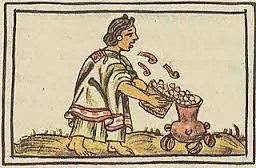
Early Spanish accounts of the Aztec Empire describe ceremonial maize dishes, including preparations associated with ritual practices. The Nahuatl word pozolli is often translated as something like “foamy” or “frothy.” Historical descriptions also connect maize stews with ceremonies involving human sacrifice, a subject that understandably makes modern dinner conversation a little awkward. Sixteenth-century friar Bernardino de Sahagún documented aspects of Aztec religious and culinary practices in his Florentine Codex. In his account, he recorded that the precursor to posole, tlacatlaolli, was a sacred maize stew reserved for priests, nobles, and warriors during specific religious ceremonies:
“…a maize stew fed to the captor and his family at the time when they would also be eating a piece of the flesh of the captive after his heart was removed for offering to the deities.”
Bernal Díaz del Castillo, a 16th century conquistador, also recorded accounts of the elaborate foods associated with the court of Moctezuma, including allegations about the consumption of human flesh. Talk about messy politics.
Yet again, history reminds us that the origins of cuisine are far more complex than a simple recipe card might suggest. Over time, Mexican posole traditions evolved, and pork became a prominent ingredient following the arrival of Europeans and their livestock (thank goodness). Traditional preparations vary by region and may include different cuts of pork, garnishes, and broths. New Mexican posole developed its own familiar character, often featuring pork, red or green chile, garlic, and plenty of that wonderful chewy corn.
Of course, as always, recipes are up for interpretation, and not everyone has the time or inclination to spend hours preparing a traditional stew. Even literary legends apparently understood the appeal of a shortcut. John Steinbeck was reportedly associated with a recipe called “pissole,” borrowed from his friend, screenwriter Jack Wagner. The recipe was about as complicated as it gets: a can of chili and a can of hominy. While I appreciate the simplicity, and I certainly appreciate a recipe that doesn’t require me to spend the afternoon in the kitchen, I’m not entirely convinced that combining canned chili and hominy qualifies as posole, but if you try his recipe, let me know what you think.
What I love most about posole is that it brings together so many things I appreciate about New Mexican food: deep historical roots, regional traditions, simple ingredients, and flavors that feel like home. It’s a dish meant for sharing, whether you’re feeding family during the holidays, warming up after a cold day, or gathering with friends for a meal. So, as the temperatures drop and the holidays approach, consider this your invitation to break out your favorite cooking vessel, stock up on dried corn, and get that red chile simmering.
For my recipe, we could try out posole’s pre-colonial roots, but if I were to do that, I’d have to acquire a few captured soldiers for the protein, and frankly, I have enough on my holiday to-do list. I’ll stick with pork, thank you very much.
Ingredients:
1.5 lbs lean pork, cut into small cubes
2 cups posole corn (often found in the frozen section. I use the Bueno brand, but if you can’t find any, Mexican style canned hominy will work)
1 white onion, coarsely chopped
1 quart chicken broth
A 14 oz tub red chile (again, I like the Bueno brand!)
3 cloves minced garlic
Cumin, oregano, salt, pepper
Directions:
- In a large crock/soup pot, sear the pork and sweat the onions (if you use bacon grease, it adds to the depth of flavor).
- Deglaze with chicken broth, then add the remaining ingredients (if you’re using canned hominy, don’t add until about ½ an hour before serving).
- Let simmer for 2-3 hours, stirring occasionally.
- Serve warm with radishes, cilantro, and chopped white onion!
Looking for more traditional and cozy recipes using corn? Check out champurrado!
Mountain Girl


Leave a Reply