Growing up in San Antonio, family meals at my grandparents’ house were a regular occurrence. My grandma would have the works: Velveeta queso dip, stuffed mushrooms, scalloped potatoes. My grandpa would usually provide the meat, and we got particularly excited when he’d make something we call “Oscar Ribs” – a recipe he got from my godfather (leave a comment and I might give you the recipe. I have to maintain some level of family culinary intrigue.) But one of the things I remember making consistent reappearances on the table was my aunt’s borracho beans.
Once we moved to New Mexico, I was surprised to discover that hardly anyone here seemed to know what borracho beans were. What? So, naturally, I have decided to spread the gospel.
Borracho beans – borracho meaning “drunken” in Spanish – are a staple in Northeast Mexican and South Texan cooking. Traditionally, they’re pinto beans, black beans, or some combination thereof cooked with beer, cilantro, and often bacon. Southern Texas versions frequently include diced tomatoes as well.
If anyone is questioning the authenticity of Texas’ bean credentials, allow me to point out that Texas farms roughly 20,000 acres of pinto beans every year – and still imports more than 100 million pounds of them annually. They take beans very seriously.
My aunt isn’t from South Texas either. She’s from West-Central Texas (I know that doesn’t sound like a big deal, but have you seen Texas? It’s huge.) But I can say, with absolutely no bias whatsoever, her borracho beans are the best. Hands down. So much so that my grandma had her provide them for the family dinners. Sometimes they were served right out of the pot they’d been cooked in. I remember them being brought over in Tupperware, and let’s be honest: Tupperware makes everything taste nostalgic.
Now, you can make the dish without beer, but then it’s called frijoles charros – named after traditional Mexican horsemen, a staple on cattle drives to Texas made by chuckwagon cooks on the open range… in my opinion, the cowboys would want the beer. Just sayin’.
Charros culture developed into the highly skilled equestrian tradition of charrería. The word “charro” itself has an interesting history. It was first documented in Spanish in 1627, where it carried a decidedly less complimentary meaning – essentially “fool,” “stupid,” or “imbecile.” But language, like beans, evolves. Over time, charro took on a much more complimentary meaning in Mexico, becoming synonymous with a ranchero, skilled vaquero, or exceptional horseman. By the nineteenth century, the term had become associated with rural people who were particularly accomplished on horseback. The tradition itself traces back to the Spanish arrival in Mexico in the sixteenth century. Spanish equestrian and livestock traditions — including those brought over by Spanish shepherds — were adopted and adapted by Indigenous people and mestizos. Eventually, these practices developed into charrería, a distinctly Mexican equestrian tradition and an important part of Mexican cultural identity.
Charros even played roles during the Mexican War of Independence before eventually becoming less associated with military service and more with national and cultural identity. Their distinctive clothing evolved right along with them, becoming the iconic charro attire we recognize today. And, of course, modern pop culture has helped cement the image. You can see the influence everywhere from traditional festivals to movies like The Three Amigos and Charro!
Anyway, back to the beans. The beer gives borracho beans an earthy, slightly hoppy flavor that you just don’t get from regular pinto beans. And before the parents reading this start wondering whether I’ve lost my mind by recommending beer in a family recipe: don’t worry. When beer is cooked for at least about 15 minutes, much of the alcohol evaporates, leaving behind the flavor.
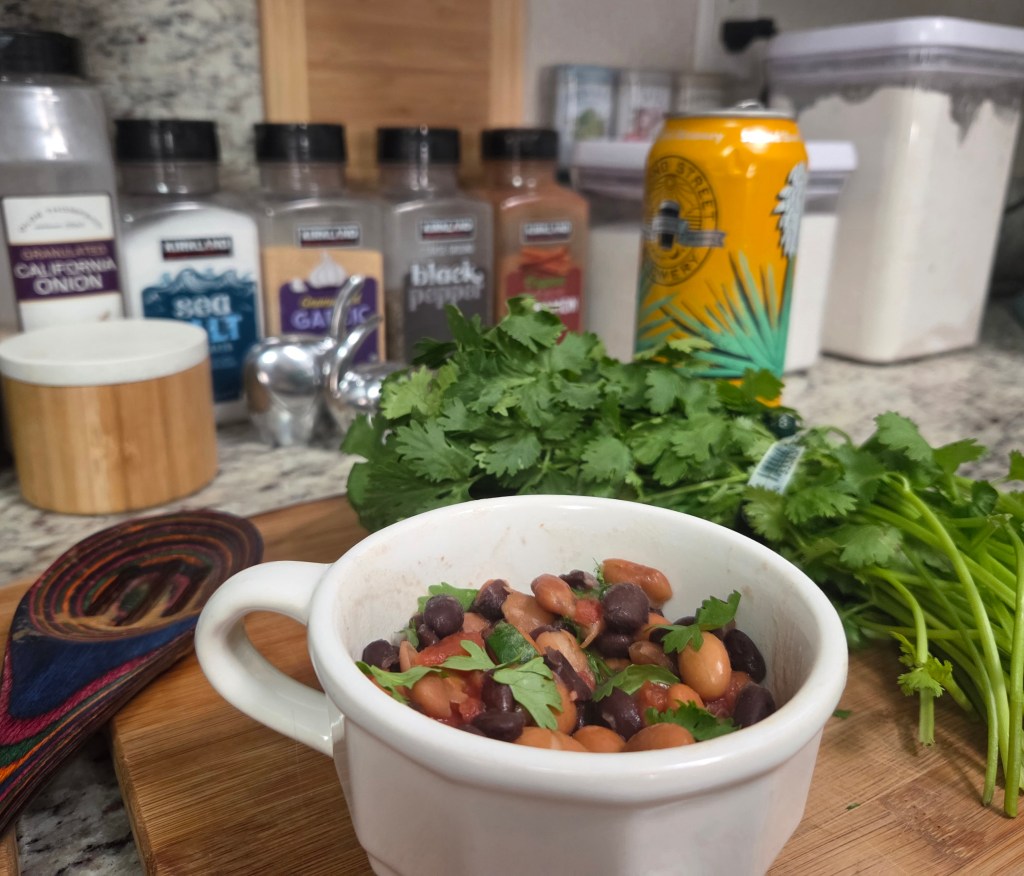
That being said, you’ll find websites suggesting a dark beer. Whatever you do, do not use dark beer. These recipes say to use these beers because they’re “richer.” Ignore them. Dark beer can make your beans bitter. My aunt always used Bud Light, but also suggested using Shiner Bock – iykyk – but my grocery store was out. So I improvised and used a local Santa Fe kolsch from Second Street Brewery, and it was delicious. Which is fitting, because borracho beans are apparently quite popular in Monterrey, Mexico — the third-largest city in Mexico and one of the country’s major brewing centers.
Now, there are plenty of recipes out there that have you soaking your beans overnight and simmering them for several hours. And I’m sure those recipes are wonderful. But they don’t taste like my childhood. And if I’m going to make borracho beans, I want the kind that reminds me of sitting around my grandparents’ table with my family, waiting for someone to pass the queso.
So, I’ll be sharing the superior version: the quick, weeknight-friendly recipe that requires considerably less planning and significantly fewer opportunities to forget that you were supposed to soak beans last night. Because some of us are moms who have children who require dinner at approximately the same time every night. And some of us would rather spend two hours eating the beans than two hours preparing them.
You’ll find my aunt’s recipe below. Grab yourself a beer (not a stout!), grab yourself some beans, and welcome to the wonderful world of borracho beans.
Ingredients:
1 can pinto beans
1 can Ranch Style beans
1 can black beans
1 can rotel
Half a can of beer
Bacon, cooked and chopped (if you’re feeling fancy)
Cilantro
Directions:
- Drain the pinto and black beans (not the Ranch Style!) Add all ingredients except cilantro into a medium-large saucepan or pot over medium-high heat.
- Cook for ~15 minutes. Add cilantro and cook for another couple minutes. Serve! (I recommend serving with a regular serving spoon… I used a slotted spoon and the beans were not as soupy as I would’ve liked.)
Goodnight Ned,
Mountain Girl


Leave a Reply