No matter your age, there’s something magical about a summer picnic. A checkered blanket spread beneath a shady tree, a basket filled with homemade foods, children running barefoot through the grass, and the promise of fireworks in the evening sky. Independence Day has long provided the perfect reason to gather outdoors, and while our menus and celebrations have evolved over the years, the spirit of the Fourth remains remarkably familiar.
Picnics have been at the heart of American summer celebrations for well over a century. One of the more unusual occurrences in picnic history took place at the beginning of the Civil War. At the First Battle of Bull Run in 1861, curious spectators, mostly politicians and newspaper reporters, packed picnic lunches and traveled to watch what they believed would be a brief and devastating battle. While history remembers Bull Run as a military engagement, it’s sometimes remembered as “The Picnic Battle” because of those optimistic spectators with their lunch baskets in tow.
Ironically, the Civil War helped shape the American picnic tradition as we know it today. In the years that followed, grieving families often visited cemeteries with lunches in hand, spending the day among the graves of loved ones. Roast beef sandwiches, ginger snaps, and simple homemade fare became part of these quiet gatherings of remembrance. These cemetery picnics eventually inspired the creation of public green spaces, as communities recognized the need for peaceful places to gather outdoors. The first official Decoration Day – what we now know as Memorial Day – was held in a cemetery in 1868 under the leadership of General James Garfield, linking remembrance, community, and shared meals in a uniquely American tradition.
Of course, picnics have always been entirely at the whim of the host. You choose the location, the company, and perhaps most importantly, what’s inside the basket. Every family brings its own traditions, recipes, and favorite treats.
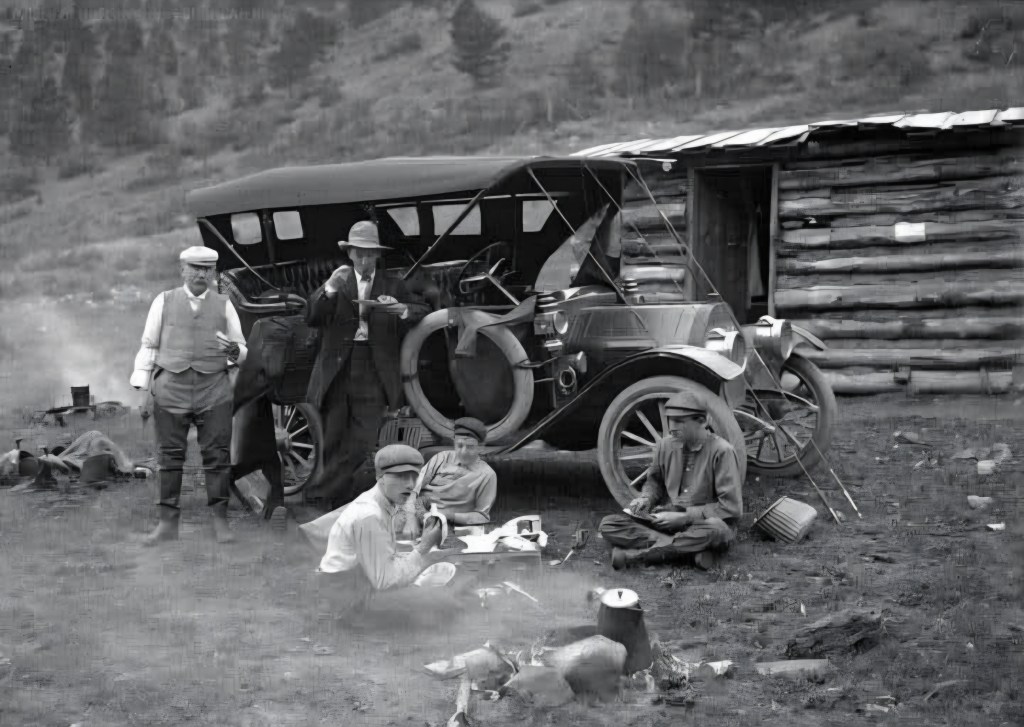
A 1912 New York Times article fondly remembered old-fashioned picnics as simple but abundant affairs. Fried chicken wrapped in wax paper, peanut butter sandwiches, potato salad tucked into fruit jars, chips, and cakes made appearances on nearly every blanket. The destination was usually a favorite swimming hole or by a creek, and afterward the local newspaper would report that “a delightful time was had” – which, according to the writer, was always true.
Those same traditions found fertile ground in the Southwest. On July 4, 1911 – just months before New Mexico achieved statehood – the Albuquerque Morning Journal painted a vivid picture of Independence Day celebrations across the territory. Rather than emphasizing rowdy saloons or booming gunfire, the newspaper described festive barbecues, basket picnics, pink lemonade, greased pig chases, and friendly speeches celebrating the promise of statehood. It was patriotism with a distinctly Southwestern flavor – one rooted in neighbors gathering together, celebrating community, and looking toward a bright future.
And for the Fourth of July, music would have filled the air as well. By the turn of the twentieth century, John Philip Sousa’s march The Stars and Stripes Forever, first performed in 1896, had become a patriotic favorite at parades. Public readings of the Declaration of Independence were common, and patriotic songs echoed through town squares long before “The Star-Spangled Banner” officially became the national anthem in 1931. Many Americans also sang “America the Beautiful,” (fun fact: it was originally titled “Pikes Peak!”) first published as a poem in an 1895.
Of course, no picnic is complete without food.
In 1905, the Los Angeles Times published a cookbook featuring an entire section devoted to picnic lunches. One “plain lunch universally liked” included ham sandwiches, baked beans, pickles, and bottles of cold coffee already mixed with milk and sugar. More elaborate menus featured fried chicken, sardine salad, strawberry rolls, corned beef salad, ginger snaps, and plenty of lemonade.
What people packed into their picnic baskets tells us just as much about history as old photographs do. At the turn of the century, technology, agriculture, and immigration all influenced what foods families enjoyed outdoors.
Looking through those menus offers a fascinating glimpse into the broader Southwest at the time. Citrus fruits appeared often, reflecting California’s orange and lemon industries, recipes like tamale croquettes hinted at the growing influence of Mexican cuisine, while German crullers showcased the region’s increasingly diverse immigrant communities.
Today’s Fourth of July picnic baskets may hold pasta salad instead of corned beef and store-bought cookies instead of homemade coconut cake, but the heart of the tradition remains the same. Whether you’re spreading a blanket beneath a cottonwood tree, gathering at a neighborhood park, or enjoying a barbecue in your backyard, you’re participating in a tradition that has connected Americans for generations.
So this Independence Day, pack your favorite sandwiches, bring along a sweet treat, wave a flag, and enjoy the simple pleasure of sharing a meal outdoors. After all, if history has taught us anything, it’s that the best picnics aren’t remembered for having the fanciest menu, but for the company enjoyed with it.
As for my menu, my contribution for the Picnic Lunches section 1905 Los Angeles Times Cookbook might look something like this:
A PICNIC LUNCH
BLT SANDWICHES. Toast bread if desired and spread with mayonnaise (the only known acceptable use of Miracle Whip); between the bread place slices of tomatoes, bacon, and lettuce or spinach.
DEVILED EGGS. Boil 12 eggs hard, peel carefully and cut in halves, mash the yolks, add salt, pepper, cayenne,1-3 teaspoons each of mayonnaise (not Miracle Whip), mustard, and horseradish; fill each half of the whites, and if desired, top with a barbeque potato chip.
CUCUMBER SALAD. Using a mandolin, shave the cucumbers into thin slices. In a bowl, or strainer, place the cucumbers on top of a paper towel and be sure to layer with salt before placing in the fridge for a while. When the cucumbers have been drained, make a coleslaw dressing; mayonnaise, sugar, white vinegar, salt, and pepper, then toss in the cucumbers (I can’t provide measurements because I never bothered to measure it… take your best guess!).
FRUIT. Our preferred fruits are typically watermelon, grapes, or strawberries, but bring whatever you like.
CHIPS. Any variety, but if you bring corn chips, a dip is a must.
CHERRY FLUFF. Combine 1 big carton of whipped cream, 1 can of (drained) crushed pineapple, 1 can sweetened condensed milk, 1 can cherry pie filling, and 1 cup of chopped pecans. Chill before serving.
BEVERAGE. For the adults of the party, a simple margarita (my family has dubbed this recipe “Marm-aritas”) would suffice. In a pitcher combine 1 can of frozen limeade, and using the same can measure out 1 can tequila, 1 ½ cans water, ½ can triple sec. For children, or those not interested in alcohol, we make a drink we call a “Lee Trevino:” which is unsweet iced tea combined with however much prepared limeade you desire.
MRS. M. G. Blogger, Albuquerque, NM
A delightful time was had,
Mountain Girl

 Mountain Girl Goes
Leave a comment