It’s been a while since I’ve posted, so bear with me while I dust off my keyboard and sweep the cobwebs from my brain. I did mean to return sooner, but life has a way of saying “Plans? What plans?”
My daughter (now 10 weeks old!) has just returned home from a stay in the hospital. During the long days and nights there, I found myself marveling at modern medicine. As someone deeply fascinated by history (what was your first clue?), I began to wonder: What if this were the 19th century? Would she have recovered? Then again, would she have ever been exposed to the illnesses that circulate through our contemporary world? As I sat with these questions, among others, I remembered a book on my shelves at home: As Long As Life; The Memoirs of a Frontier Woman Doctor by Mary Canaga Rowland. It seemed to me the perfect companion for this season of reflection, and so we begin, my first official blog post back will be a book review.
Mary Canaga Rowland was born in 1873 – The same year as Willa Cather, author of Death Comes for the Archbishop, for anyone curious (a contender for my next book review?) – in the new state of Nebraska, and lived until 1966. Her 93 years saw one of the most dynamic periods of American History. As a child on the Nebraska frontier, she and her family would hide during Sioux raids. In her old age, she watched newsreels of atomic explosions with fascination. Few lives have stretched across such changes in society, medicine, and technology.
This autobiography, with Rowland’s great-great-nephew serving as editor, chronicles her life as one of earliest women physicians in the American West. The editor’s commentary helps provide historical context and smooth transitions between episodes, making the memoir feel more cohesive without losing Rowland’s distinctive voice.
The book reminded me often of one of my childhood favorites, James Herriot’s All Creatures Great and Small. Both are collections of memorable cases and colorful characters rather than tightly structured narratives. Like Herriot, Rowland possessed a gift for storytelling and a deep affection for the people she served, even when they exasperated her.
The memoir begins with her childhood in 1870s Nebraska. She was the daughter of a Civil War veteran and a midwife, and from an early age she was fascinated by her mother’s medical books. Her father encouraged her curiosity and intelligence, repeatedly telling her that she was “just as smart as any man.” In an era when many girls were taught precisely the opposite, Rowland credits that confidence with carrying her through the many obstacles she encountered as a woman pursuing medicine.
Much of the memoir focuses on the extraordinary events of her life, as autobiographies often do. Shortly after marrying, Rowland experienced an unimaginable tragedy when her husband was murdered only two full days after the birth of their first child. The story is heartbreaking, but it also demonstrates the resilience that would define the rest of her life.
The book primarily recounts Rowland’s work with numerous unusual medical cases that reveal both the limits and possibilities of medicine in her era. Again and again, I found myself wondering how many lives were balanced on a knife’s edge simply because antibiotics, advanced imaging, specialized hospitals, and modern intensive care did not yet exist. Her medical career took place mostly in towns where modern healthcare infrastructure barely existed. While practicing in Kansas, the nearest hospitals were hundreds of miles away in Denver or Kansas City, highlighting that physicians on the frontier had to be doctors, surgeons, pharmacists, counselors, and, often, miracle workers. Reading about her encounters while sitting in a modern hospital room gave me a renewed appreciation for what medicine once demanded of practitioners – and what patients endured.
Many physicians back then had the arduous task of introducing scientific understanding to oftentimes deeply superstitious communities dominated by old wives tales and home remedies. One story perfectly captures the frustrations frontier doctors faced. Rowland successfully treated a man suffering from a severe neck wound and nursed him back toward health. Unfortunately, his family became convinced that he might die and decided that he should be baptized immediately. They immersed him in dirty water and introduced an infection that ultimately killed him. The tragedy is almost unbearable because it was so ironically preventable.
Other stories reveal dimensions of frontier life rarely discussed in standard histories. One particularly fascinating account concerns a man named Ray whose behavior became increasingly disturbed. After being committed to a state hospital, doctors discovered that Ray was biologically female and had been living as a man for years. According to the memoir, Ray and her father had concluded that life in the West was safer and more manageable for a man than for a woman. After the discovery, she returned home and lived as herself for the rest of her life. Whatever conclusions modern readers may draw, the story provides a remarkable glimpse into the social realities and pressures of frontier existence.
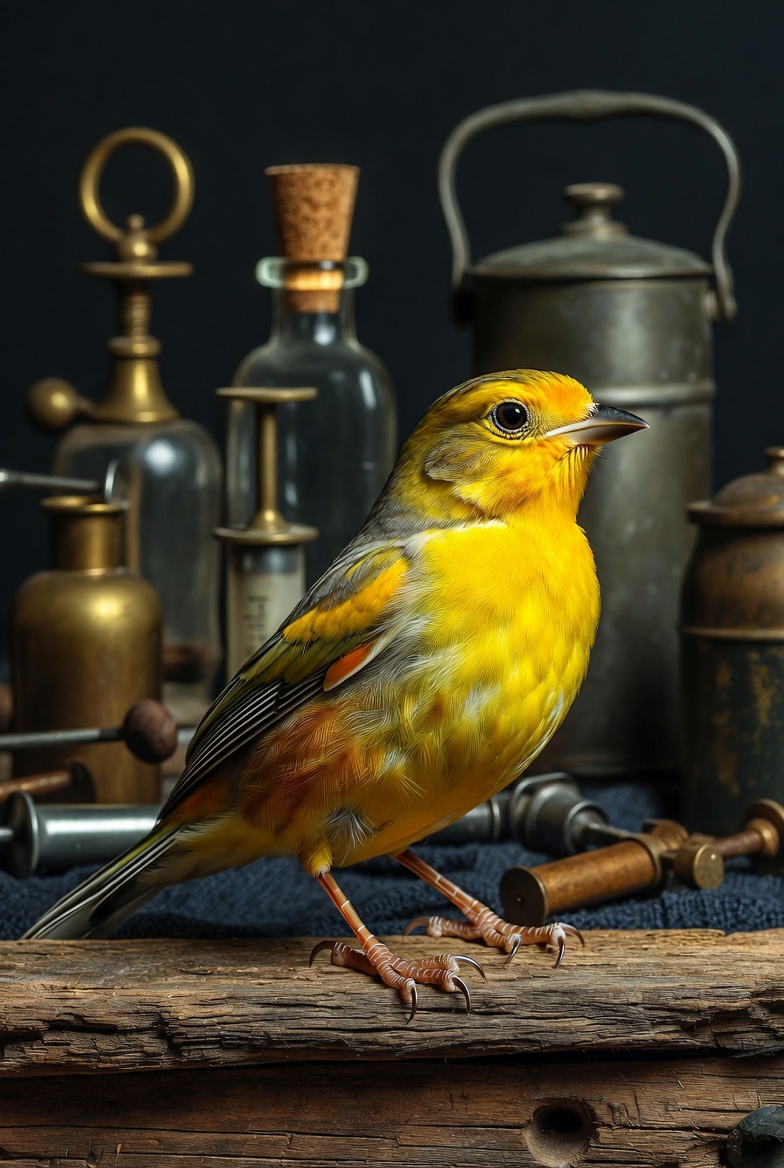
The memoir closes with a chapter titled “Chicky Boy,” an affectionate account of her beloved pet canary. Through the bird’s life and death, Rowland reflects on heaven and what makes life meaningful. One observation stayed with me: “Who needs golden pavement or marble stairways? What we will need is the joyous song of birds.”
Sitting by my daughter’s hospital bed, what struck me most was not how different Rowland’s world was from ours. It was how familiar it felt. Parents still worry. Doctors still work long hours. Communities still struggle to balance evidence and tradition. Human beings still face illness with a mixture of courage, fear, hope, and stubbornness.
Late in life, Rowland turned increasingly to poetry, and the final pages leave readers with one of Rowland’s poems, “A Woven Fabric,” which begins:
Life is woven of circumstances and will
Circumstances the thread, will the shuttle
Weaving ugly rags or fine and beautiful cloth.
After the past few weeks, those lines feel especially meaningful. None of us chooses all our circumstances or the countless uncertainties that accompany life… and parenthood. But we do choose how we respond. We choose whether fear or gratitude will have the final word. Watching my daughter recover, I was reminded that life is indeed woven from circumstance and will. But somehow, through grace, perseverance, and the care of others, the threads of life can still become something beautiful.
Golden threads of friendship.
Love in return for their constancy.
Mountain Girl
 Mountain Girl Goes
Leave a comment