This summer, I had the opportunity to help out with the summer camp at the National Museum of Nuclear Science and History. Each week is centered around a different theme, one of which was titled “Survival Week.” As I was raised in a very small mountain town by an Eagle Scout, I was thrilled to hear this particular theme. As children, the aforementioned Eagle Dad would take my brother and I on hikes and teach us about our surroundings and began planting seeds for wilderness survival – “That plant is edible, this plant is poison, that plant is gross, but can be eaten, this plant will make you run for the nearest cathole” – and had me take orienteering three times (maybe I shouldn’t have been the one to teach the kids about triangulation…).
Getting to talk to fresh faces about the Ten Essentials, how to avoid giardia, and what to do in the event of a Zombie Apocalypse, I began to think about families of the bygone era and their resources on major trails like the Santa Fe and Oregon Trails. While the Ten Essentials is a fairly new concept – developed by the Mountaineers organization in the 1930s, and formalized in 1974 – books like The Prairie Traveler: A Handbook for Overland Expeditions written by Captain Randolph B. Marcy in 1859, helped these families be prepared in a similar way (of course a day hike in modernity is a bit different than the multi-month walk along the dysentery-ridden Oregon Trail). This particular handbook did for its readers what we were trying to begin for the kids in the summer camp and included “best routes, first aid, recommended clothing, shelter, provisions, wagon maintenance, and the selection and care of horses, information concerning the habits of Indians.” I often take for granted the things I know about living in the Southwest, and I’m sure that people like William Becknell, credited founder of the Santa Fe Trail, sometimes felt the same way, so being able to point the travelers to a guidebook for things you may have missed is a remarkable resource!
Many of these trails served purposes beyond immigration. The Oregon Trail was used for land acquisition, the Santa Fe Trail for trading, and later, the Chisholm and Goodnight-Loving Trails were for cattle trade. Depending on which trail was chosen and the purpose of the trip packing would be affected. Captain Marcy suggests “Supplies for a march should be put up in the most secure, compact, and portable shape.” Something these travelers benefitted from was the use of wagons, the average wagon was four feet wide by twelve feet long, a caravan on these trails was typically made up of 25 to 60 wagons spread amongst the guides, traders, and those seeking a new life. After packing essentials like clothing, food, and camp equipment, many travelers would do something akin to a “shakedown” (a gear inspection – for both necessities and nonessentials) in Independence, Missouri before hitting the trail. In The Prairie Traveler, tips are made to avoid disease by taking measures like water purification: “Water taken from stagnant pools… would be very likely to generate fevers and dysenteries if taken into the stomach without purification.” Along these lines, a popular purchase in Independence, where the Santa Fe and Oregon Trails began, were “Sappington’s Anti-Fever Pills,” quinine pills used to fight off malaria and influenza, the use discovered and developed by Dr. John Sappington. Necessities, protection (firearms had to be considered as defense against the Native Americans and wild animals, as well as use for hunting along the trail throughout the journey), and survival items had to be considered over luxuries, comforts, and memories, and many preparing for the trail understood that (harkening back to Beret’s internal struggles in Giants in the Earth by O.E. Rolvaag – I will be posting a review next week, so keep an eye out!).
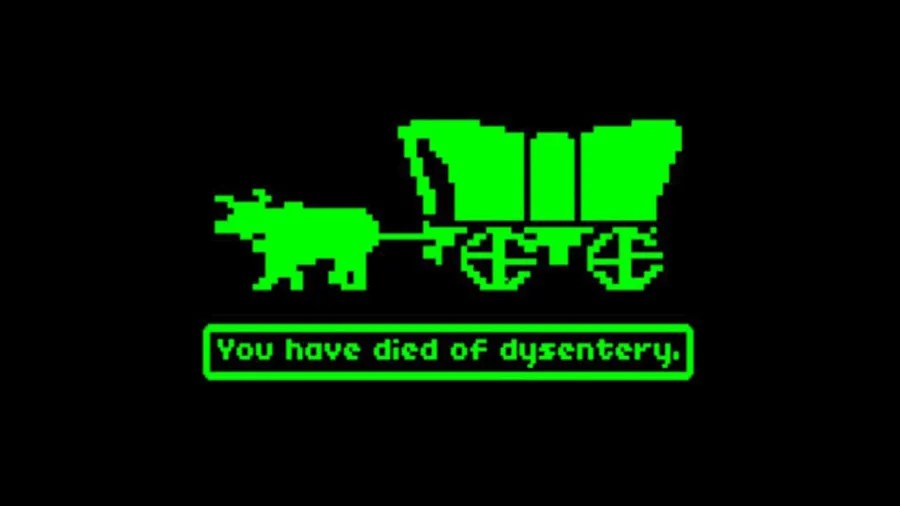
Something to consider before embarking on any trail, are the instructions we learned from the edutainment computer game The Oregon Trail on its start screen:
- Travel the trail
- Learn about the trail
- See the Oregon top ten
- Turn the sound off
What is your choice?
Mountain Girl


Leave a Reply