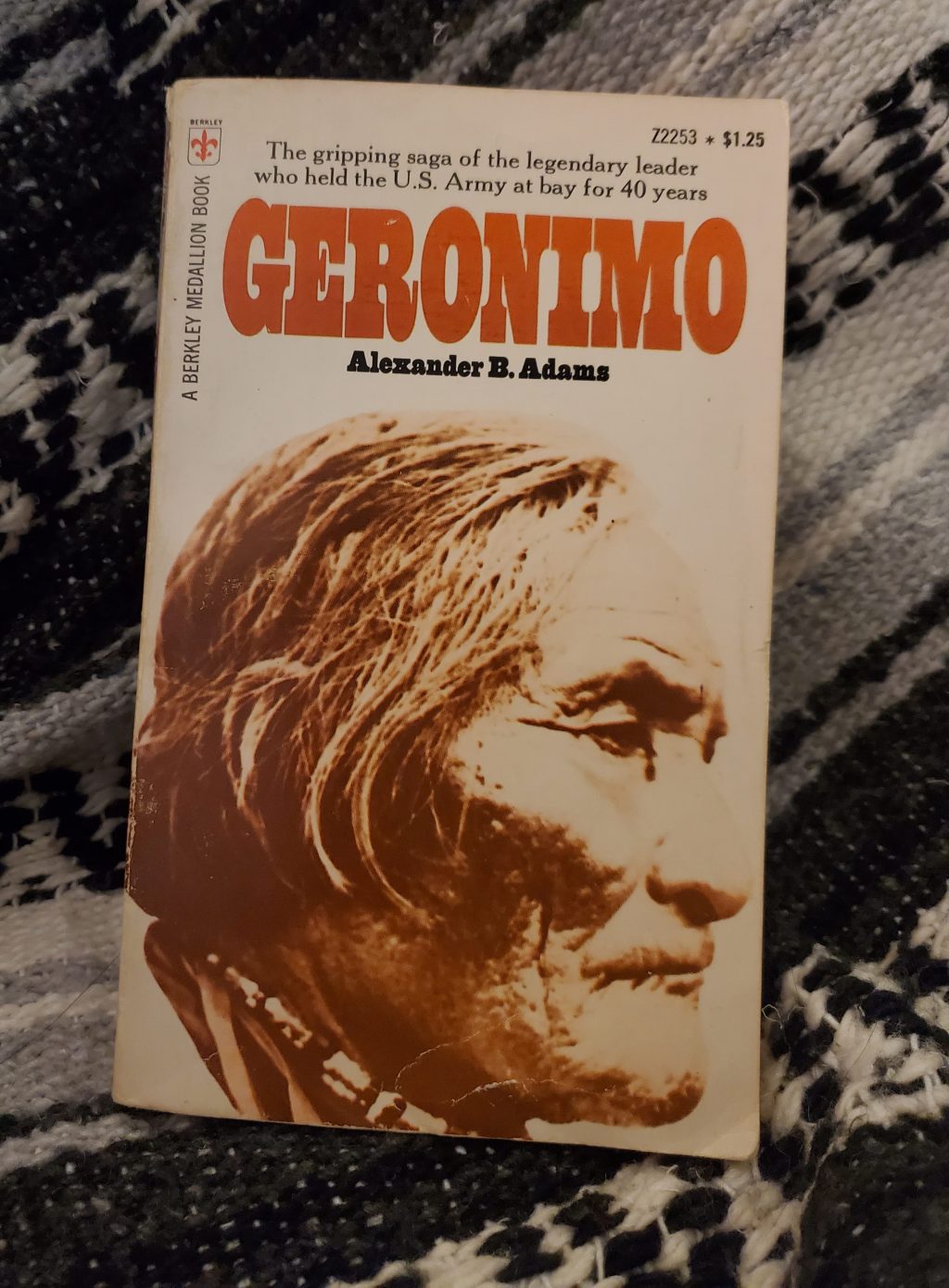
Alexander B. Adams’ Geronimo (published 1971) follows the biographical narrative of the famed Apache leader and his people’s struggle for their land as the Southwest continually shifted control – first the Spaniards, then the Mexicans, and finally the Americans. While this book isn’t one of the more popular works on Geronimo’s story, Adams does a wonderful job of providing a solid narrative introduction for those new to the topic while weaving together history, myth, and moral complexity.
If you pick up this book, keep in mind that it was written and published over fifty years ago – the research and information it contains reflects the knowledge and attitude of the time. Some maps are inaccurate, and certain terms of descriptions may be considered outdated to the modern reader. Despite this, Adams does a good job of providing us a relatively timeless and vivid account that captures the brutality and tragedy of the Apache wars with resolute honesty.
In fact, there were times that his storytelling was disturbingly graphic: he doesn’t shy away from describing the violent details, most likely to garner a reaction from his audience. More than once, I found myself taking a step away from the book after these chapters and scenes to take a breath. This unflinching take, however, helps underscore the raw humanity of the story – serving to remind us that real history is not neat or sanitized.
Adams also does a good job of striking a balance in portraying both the Apaches and those they faced. While being sympathetic to the struggles and injustices endured by the Apache, he does a good job of not falling into a condescending tone that can so often accompany the emerging prejudices in writing histories pertaining to Native Americans. He acknowledges that the Apache were often cruel and merciless in their fight, but then asks, were the Americans not the same? Both sides broke their word. Both sides killed indiscriminately. Through presenting parallels, Adams confronts the shared ferocity that defined this era rather than viewing the story through the lens of moral binaries.
The book begins in the midst of the Mexican Territorial Period, setting the stage with already fluctuating power dynamics that shaped the Southwest into what it is today. Geronimo himself doesn’t make an appearance until around the third chapter, after the Treaty of Guadalupe Hidalgo (1848) and the Americans arrive (marking the beginning of the Territorial Period). While the Apache had a begrudging truce for coexistence with the Spaniards and then Mexicans, the arrival of the Americans, which initially brought hope to Geronimo’s people, changed everything: “They were more aggressive and more determined. They also seemed to have an endless quantity of supplies . . . the American soldiers were better supplied and trained than the poorly fed, underpaid Mexicans.”
By the end of the book, Adams portrays Geronimo as a man fighting for his homeland and his freedom, not as a savage rebel or romanticized hero, concluding that the Apache leader “fought an honorable fight—not for greed or profit or empire, but only for the two causes Americans respect most.”
Full disclosure: this was a difficult book for me to get into….. the topic was interesting, but for whatever reason, sticking with it was a little tough. So, in spite of some dated elements, Geronimo is a worthwhile read for those who may be seeking an accessible entry point to the Apache Wars. It’s not definitive scholarship, but rather a reminder of the human cost of conquest – and the enduring spirit of resistance that defined Geronimo’s life and legacy.
Until next week,
Mountain Girl
 Mountain Girl Goes
Leave a comment