Hello! Just a quick introduction, my name on here (and a few other places) is Crash and I’m
Mountain Girl’s husband! I currently work in Emergency Management and Public Health with a background in Pre-Hospital and Hospital medicine. Where Mountain Girl has a passion and love for History, my passions (besides her and our family) are centered on medicine and community preparedness/resiliency. Mountain Girl asked me if I would be open to writing something for Halloween and I was interested in seeing if I could write as well as she does about something I’m passionate about. So, I got to thinking what’s public health related, historical, and had an impact on the West/Southwest that fits the Halloween theme of October? Plague!
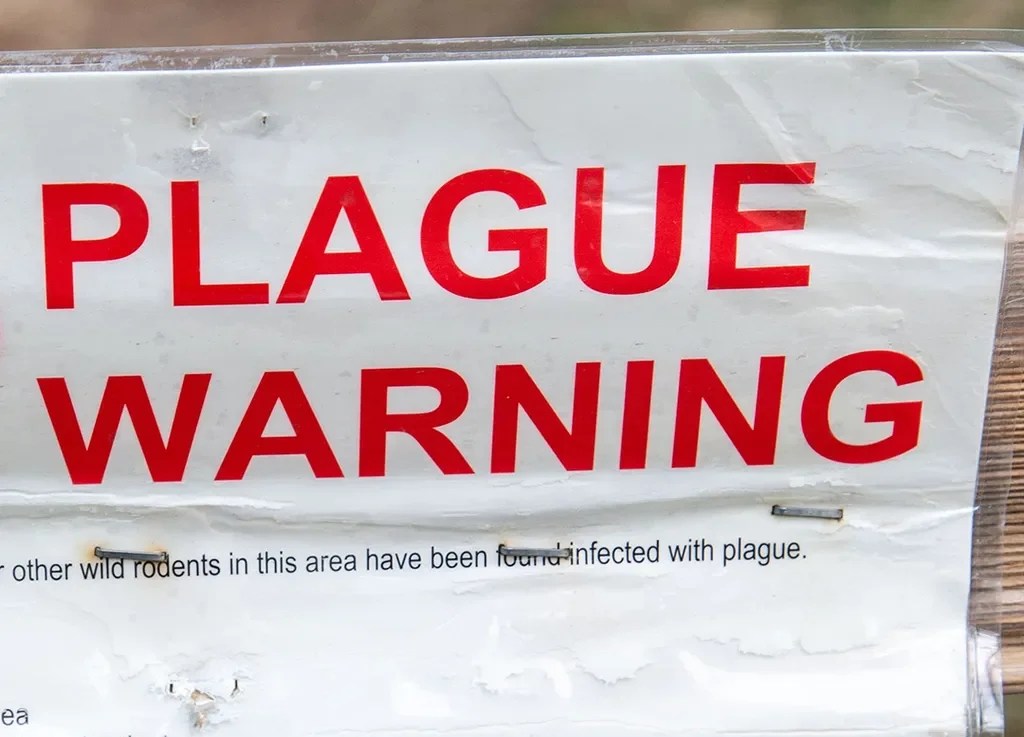
Plague, specifically bubonic/pneumonic plague like the Black Death, came to America in 1900 when it killed a man from San Francisco named Wong Chut King and then went on to kill at least another 172 people over the next 8 years (Barbary Plague). At the time California refused to acknowledge that the plague was in San Francisco due to concern of their fresh produce industry would be completely lost. When they could no longer keep the existence of the plague quiet, many health officials and politicians at the time started saying that White Anglo European people would be safe as they had immunity from their relatives living through the European Black Death (which they did not). This was “confirmed” when the plague began infecting more people with the worst being on residents of Chinatown. This served to lower concerns for many white residents believing that they had evolved immunity and that they were cleaner and healthier than those living in Chinatown.
The main two forces for cleaning up and ending the plague were: The head of the city’s Marine Hospital Service, Dr. Joseph J. Kinyoun and his replacement Dr. Rupert Blue. Both men faced complete opposition from their politicians and by many of their colleagues who thought that for the better good, it would be better to deny the existence of the plague. Dr. Joseph J. Kinyoun was even blamed for either falsifying his reports or even CREATING the plague in the first place to look like a hero. He was eventually relocated to Detroit by the then California Governor Henry Gage and the federal government (Government job…) to keep him quiet about the plague. His replacement though was just as concerned about the plague and quite a bit more politically savvy. He also had a better public personality and was better at communicating scientific and medical information to the public in a way they could more easily understand. Including the community leaders and officials of the city’s Chinese community.
People with symptoms of the plague (fever, chills, headaches, muscle aches, shortness of
breath) were told that they just needed some good medication (to help with the pain), dry air (to help with the coughing), some elevation (to help your constitution), some sun (supposed to help with fevers) and some peace and quiet to really heal up well. Where could you find all those? In the Southwest territories of course! Northern Arizona, Southern Colorado, Northern New Mexico, and Southern Utah were perfect places for those requirements (Arizona and New Mexico weren’t states until 1912)! Many health professionals sent patients that could afford it to the Southwest for recovery. New railroads like the “Arrow Route” were opening, allowing faster transportation across the territory. With new towns developing around the railroad and tourism becoming a thing, the sweeping vistas and painting like sunsets were a major draw for those looking to get away and recuperate in comfort and peace. Native populations with the Pueblos added a touch of mystery and “savagery” that was very vogue and encouraged those that wanted to explore the “remaining American wilderness”.
This travel also had the wonderful effect of getting plagued people out of the state of California where there wasn’t supposed to be a plague epidemic going on… Plague was carried by humans, fleas, and most famously, rats. While these groups still carry plague, in the Southwest there aren’t too many people or rats around, so the plague had to find alternative hosts. And it primarily settled on prairie dogs, squirrels, and deer mice, 3 very common animals in the Southwest. Along with their fleas, they have insured that the plague is still around, even today. These animals like to stay close to current human settlements for warmth, shelter, and possible food sources. But back in the early 1900’s humans were the ones building close to them since prairie dogs live close to water sources and the soil they like to burrow in is often softer and richer, making it better for farming. Mice, squirrels, and of course their fleas followed the humans to these sites and made great little systems to help grow and spread plague.
A side effect of those exploring the “remaining American wilderness” was that ill informed
people were convinced that the Native people killed and ate prairie dogs and coyotes, so they caught and cooked (often intentionally poorly cooked) those animals to sell to the tourists under the name of “authentic food” of the local “savages”. Most of the time, the only ones they ended up catching were the old and sick, perfect carriers of the plague.
With hunting and appropriate disposal of infected prairie dog colonies, pest control, noninvasive animal treatment, and better understanding of plague, human infections and death have been on the decline. But it is not completely gone. From 2000-2023, 502 people contracted plague with 254 of those being in New Mexico (50.6%). The CDC says that ~7 people get the plague every year with the most recent being in late August this year in New Mexico and Arizona in July. A disease that was once so prevalent and destructive is now almost completely gone but will never be forgotten.
Be boo-tiful you people,
-Crash
 Mountain Girl Goes
Leave a comment