As the October air continues to creep into the Southwest, tree leaves begin to turn their autumnal shades, and Halloween decorations are beginning to adorn porches, there’s something magical in the atmosphere. Halloween is a time for ghost stories and celebrating all things mystical and mysterious. But in New Mexico and other parts of the American Southwest, real magic isn’t found in the corn mazes and haunted houses – it’s rooted in the traditions of the curanderas, the healers of Hispanic communities.
Halloween might conjure up images of broom-wielding, warty brujas (witches) – a term containing dark connotations – the curandera is the antithesis of that, a “good witch,” if you will. Rather than casting spells and conjuring shadows, the healer works with plants, prayer, and wisdom to bring balance to those in need.
So, who are these curanderas? More often women than men, these traditional folk healers carry a heritage that goes back centuries, and have been central figures to many Hispanic communities since the spread of Spanish colonization in the 16th century. Their role in these communities was to restore harmony in the mind, body, and spirit of their patients, their practices based in faith just as much as knowledge, which in ways made them more trusted than medical doctors. Why? Well, curanderas would treat illness not only with herbal remedies, but also by addressing imbalances in the body and mind: was your stomach upset because of something you ate, or was it due to sadness or anxiety? A tea made from yarrow may have been brewed for the stomach to settle, and the healer may have then performed a ritual to treat the emotional side.
In early New Mexico and the surrounding Southwest, especially before the 1900s, medical doctors were scarce. But a curandera could always be found nearby, along with her knowledge of plants and faith, ability to assist in childbirth, and her understanding of her community members. Her holistic practice combined common sense, faith, and an understanding of the local environment.
Before prescriptions and apothecaries, the curanderas were the original pharmacists. While they often operated on a “use what you find” mentality, cultivated gardens may have also supplemented the harder things to come by. Many of the plants used were both European and Indigenous in nature (for example, rue, a plant that can be used for its anti-inflammatory properties, was brought over from Europe, as was angelica).While the healers gathered what they needed, there was a tradition of giving thanks and making sure to leave enough behind for regrowth….. pharmacists and conservationists!
Some common plants that may be found included:
- Willow bark – for inflammation (and the precursor to modern day Aspirin!)
- Yarrow – for upset stomachs
- Chokecherry – brewed for sore throats
- Kinnickkinnick – used for inflammation and urinary issues
- Calendula – for its astringent properties (can be good for the skin)
By blending plant knowledge and Spanish folk traditions, a curandera’s job was much more than that of an herbalist – it was healing through an interconnection of nature, spirit, and community.
If you’d like a look at a fictional take, pick up Bless Me, Ultima by Rudolfo Anaya, fiction’s most famous depiction of a curandera. Set in 1940’s New Mexico, Ultima, who is an elderly curandera, comes to live with a young boy and his family. Ultima not only heals the sick, she lifts curses and battles the dark magic of the brujas. Her knowledge and skill as a spiritual healer is amazing, but much like real-life curanderas, she makes some a bit uneasy, mistaking her healing for sorcery. This book does a good job of illustrating the tensions surrounding this tradition: curanderas are revered by many, and misunderstood by the rest. But there is nothing sinister in Ultima’s work – just a love for life and profound respect for its mysteries.
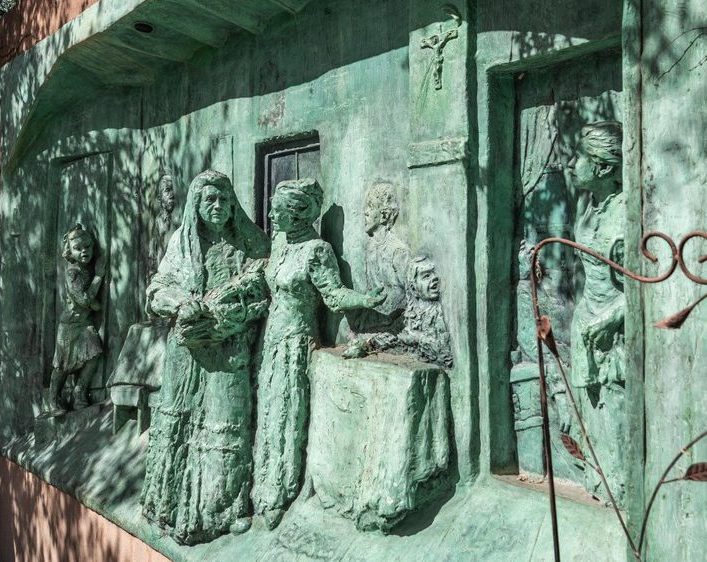
So this Halloween season, if you look up to see witches in the sky while you’re running “Amuck, amuck, amuck,” take a moment to consider the magic of the curanderas – the healers who work to find balance in their patients, faith, nature, and community. Maybe visit El Jardin de la Curandera at the Albuquerque Botanical Garden, where a historical marker honors their legacy
“From historic to more recent times, nearly every New Mexican village supported a resident curandera… Her knowledge of plants and their medicinal properties was passed from generation to generation. Her garden was the mountain, valleys, plains, and riverbanks.”
This section of the garden is a beautiful tribute to a tradition that still thrives today (a big thank you to the volunteer, Sarah, for showing me around!). In modern New Mexico, curanderas are still the ones called upon to help with births, sickness, and spiritual distress. You can find them quietly practicing alongside doulas, midwives, and community counselors, helping to preserve the wisdom of their grandmothers.
So, not all witches wear pointy hats and ride broomsticks and vacuums. Some wear aprons and carry bundles of herbs, and sit quietly in gardens listening to what the plants have to say.
Sana, sana!
Mountain Girl
You can find out more about the Curandera Garden Tour at the Albuquerque Botanical Garden here!
 Mountain Girl Goes
Leave a comment